
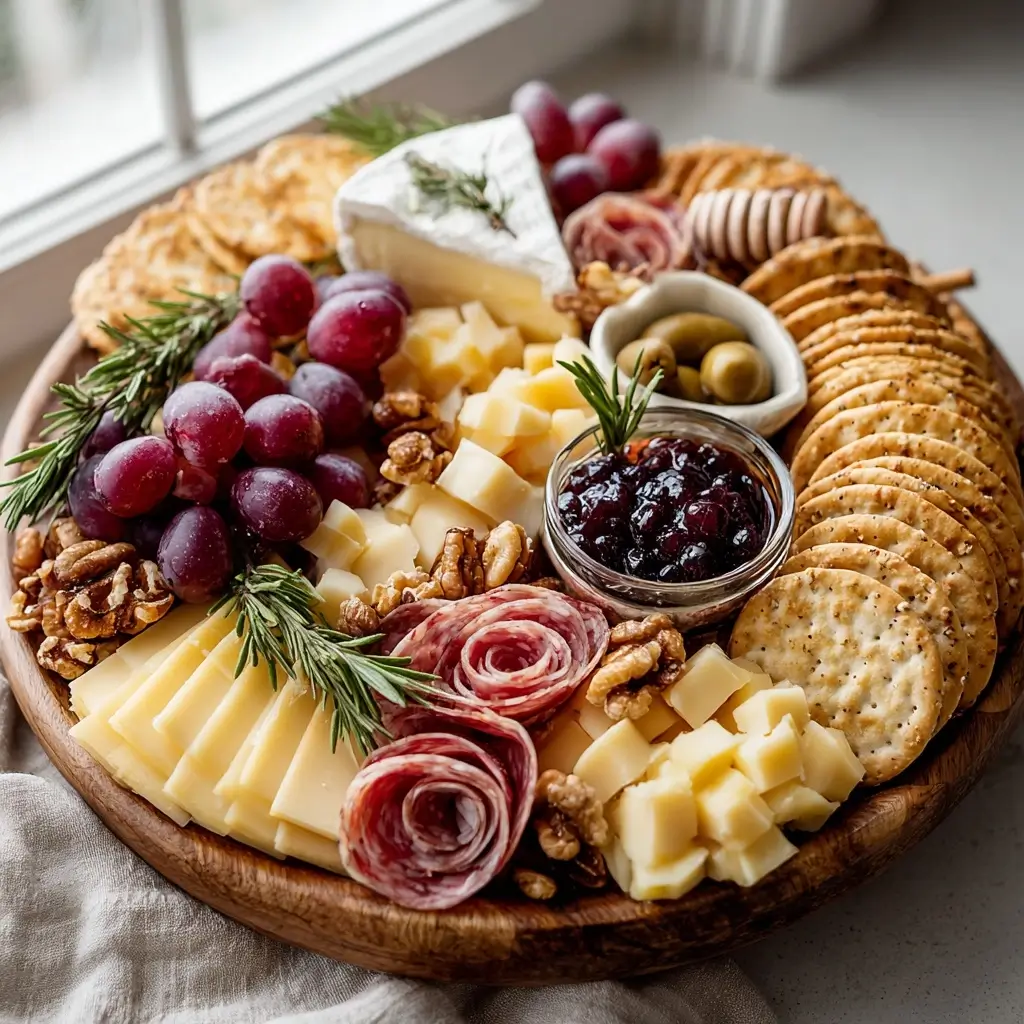
A round charcuterie board is one of the easiest ways to make a table feel welcoming, even if you are just feeding a few friends or putting together a simple family snack. With a little planning, you can create a beautiful board that looks abundant, balanced, and easy to graze from.
Round Board Layout
Equipment
- 1 Round board or platter
- 1 Small bowls for spreads
Ingredients
Board Ingredients
- 2 to 3 cheeses such as cheddar, gouda, brie, or manchego
- 2 to 3 cured meats such as turkey salami or chicken-based deli slices
- 1 fresh fruit such as grapes, berries, figs, or sliced apples
- 1 dried fruit such as apricots, dates, or cranberries
- 1 crackers, breadsticks, or sliced baguette
- 1 crunchy extras such as nuts, pretzels, or seeded crackers
- 1 spreads such as honey, fig jam, mustard, or fruit preserves
- 1 fresh vegetables such as cucumbers, carrots, or radishes, if desired
- 1 garnishes such as fresh herbs, rosemary, or edible flowers
Instructions
- Choose a round board, platter, or large tray. If you do not have one, a round baking pan lined with parchment can work in a pinch.
- Set your biggest items first, usually the cheese wedges, small bowls of spreads, or a few folded slices of meat. Space them around the board so they help create balance.
- Fill in around the anchors with clusters of fruit, crackers, and bread. Grouping items in small sections makes the board look fuller and easier to serve from.
- Use nuts, dried fruit, herbs, or extra berries to fill any open spots. These little touches help the board feel complete without looking crowded.
- Add a few herb sprigs or a small garnish near the center and edges. Then step back and check for empty spaces that need one last handful of something colorful.
Notes
Why You’ll Love This Round Board Layout
This style is beginner-friendly because the circular shape naturally guides your placement. You do not need perfect symmetry, just a few thoughtful zones that make the board feel full and inviting.
It is also flexible. You can mix sweet, savory, creamy, crunchy, and fresh items based on what you already have, which makes it great for casual entertaining.
Round Board Layout Ingredients & Substitutions
For a balanced board, choose a mix of colors, textures, and flavors. Here is a simple starting point.
- 2 to 3 cheeses, such as cheddar, gouda, brie, or manchego
- 2 to 3 cured meats, such as turkey salami or chicken-based deli slices
- Fresh fruit, such as grapes, berries, figs, or sliced apples
- Dried fruit, such as apricots, dates, or cranberries
- Crackers, breadsticks, or sliced baguette
- Crunchy extras, such as nuts, pretzels, or seeded crackers
- Spreads, such as honey, fig jam, mustard, or fruit preserves
- Fresh vegetables, such as cucumbers, carrots, or radishes, if desired
- Garnishes, such as fresh herbs, rosemary, or edible flowers
Easy substitutions: Swap any cheese for a similar texture or flavor, use roasted nuts instead of raw, or choose one fresh fruit and one dried fruit if you want a simpler board. If you prefer to skip cured meats, add more cheese, hummus, or roasted vegetables for extra variety.
Step-by-Step Instructions to Make Round Board Layout
Step 1: Start with your board
Choose a round board, platter, or large tray. If you do not have one, a round baking pan lined with parchment can work in a pinch.
Step 2: Place the anchor items
Set your biggest items first, usually the cheese wedges, small bowls of spreads, or a few folded slices of meat. Space them around the board so they help create balance.
Step 3: Add the medium items
Fill in around the anchors with clusters of fruit, crackers, and bread. Grouping items in small sections makes the board look fuller and easier to serve from.
Step 4: Tuck in the small details
Use nuts, dried fruit, herbs, or extra berries to fill any open spots. These little touches help the board feel complete without looking crowded.
Step 5: Finish with a fresh touch
Add a few herb sprigs or a small garnish near the center and edges. Then step back and check for empty spaces that need one last handful of something colorful.
Tips for Success
Keep the board relaxed, not overworked. A few well-placed clusters look better than trying to line everything up too neatly.
Choose at least one soft item, one crunchy item, and one juicy item so the board feels varied and interesting. Also, let some foods overlap a little, that is what helps the board look abundant.
If you are serving a crowd, prepare a few extra crackers and fruit on the side so you can refill the board as needed.
Variations of Round Board Layout
You can make this board feel different every time by changing the theme.
Breakfast board: Use yogurt, berries, granola, sliced fruit, muffins, and soft cheeses.
Sweet board: Fill it with chocolate, cookies, fresh fruit, candied nuts, and small sweets.
Savory board: Focus on cheeses, deli slices, olives, pickles, crackers, and mustard.
Seasonal board: Use winter citrus, summer stone fruit, autumn apples, or spring berries for a fresh color story.
Serving Suggestions: What to Pair with Round Board Layout
Serve this board as a starter for dinner, a light lunch, or a party snack. It pairs nicely with soup, salad, sparkling water, fresh juice, or a simple tea service.
If you are building a larger spread, add a green salad, a warm dip, or a fruit-forward dessert so the table feels complete.
Storage & Reheating Instructions
Charcuterie boards are best assembled close to serving time. If you need to prep ahead, slice the cheese, wash the fruit, and portion the crackers a few hours early, then cover and chill the ingredients separately.
Store leftovers in airtight containers in the refrigerator. Most cheeses and meats keep well for 2 to 3 days, while cut fruit is best enjoyed sooner. Crackers and bread should be stored at room temperature in a sealed container to keep them crisp.
There is no reheating needed, but let chilled cheese sit out for 15 to 20 minutes before serving again so the flavor and texture improve.
Memories Made Around the Table
There is something comforting about a board that invites people to slow down and pick what they love. I always think of these as the kind of dishes that start conversations, because everyone reaches for something different and the table begins to feel lively right away.
FAQs
How do I make a round board look full?
Use clusters instead of straight lines, and fill empty spots with small items like nuts, berries, or herbs. A full-looking board comes from layering, not from using too many ingredients.
What size board should I use?
A 12 to 14 inch round board works well for a small group, while a larger board is better if you want more variety or are serving a crowd.
Can I make this ahead of time?
You can prep the ingredients ahead, but assemble the board as close to serving time as possible so the crackers stay crisp and the fruit stays fresh.
What if I do not have a round board?
You can still use the same layout idea on a square tray, large plate, or parchment-lined baking sheet. The circular grouping style is what matters most.
Final Thoughts
A round charcuterie board is a simple way to make entertaining feel easy and thoughtful. Once you learn the basic layout, you can mix and match ingredients to fit any occasion, season, or mood.